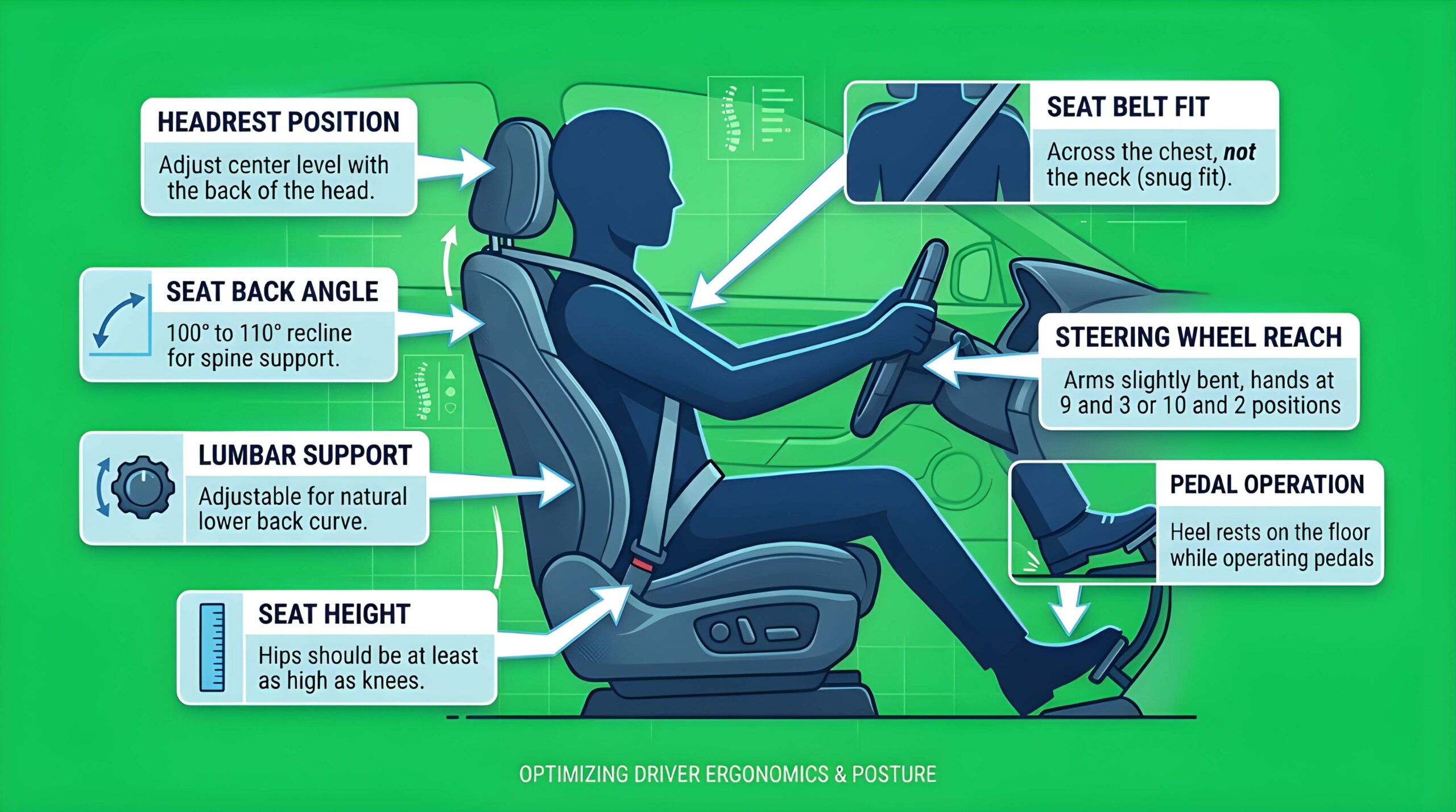
The Commute Problem: Repetitive Strain on Your Cervical Spine
If you’re one of thousands of Alameda residents commuting daily to Oakland, San Francisco, or beyond, you already know the frustration: sitting in traffic, gripping the steering wheel, and watching the minutes (and your stress levels) climb. What you might not realize is that your commute could be causing real, measurable damage to your cervical spine—the delicate stack of vertebrae supporting your neck and head.
Long commutes, especially those involving bumper-to-bumper traffic and repetitive steering movements, place your neck in a state of constant low-level strain. Unlike a one-time injury, commute-related neck pain builds gradually through poor positioning, muscle tension, and prolonged static posture. Many of our patients in Alameda and the surrounding Bay Area don’t connect their neck discomfort to their daily drive—until the pain becomes impossible to ignore.
How Your Steering Wheel Position Affects Your Spine
Most drivers don’t think about their hand position on the steering wheel or how far they sit from the dashboard. But these details matter enormously for spinal health. When you sit too close to the wheel, your shoulders round forward and your neck juts ahead—a posture called “forward head posture.” This position places extra stress on the cervical vertebrae and the muscles that support them.
Conversely, sitting too far back and reaching for the wheel creates excessive tension in your shoulders and upper back. The ideal position keeps your shoulders relaxed, your elbows at roughly 90 degrees, and your head balanced directly over your shoulders. Yet in the stress of Bay Area traffic, most drivers unconsciously tense up, creeping closer to the wheel and gripping it harder—exactly the opposite of what your spine needs.
Tension, Traffic, and Spinal Misalignment
Traffic delays are a daily reality for Alameda commuters. Sitting stationary or crawling forward inch by inch means your neck muscles remain in a state of low-level contraction for extended periods. This sustained tension can lead to muscle imbalances, reduced blood flow to surrounding tissues, and—over weeks and months—postural changes that contribute to vertebral misalignment.
When vertebrae drift out of proper alignment, they can irritate nearby nerves and soft tissues, causing pain that radiates into your shoulders, arms, or between your shoulder blades. Many people assume this pain is just “from driving” and accept it as inevitable. In reality, spinal misalignment is addressable, and early intervention prevents worse problems down the road.
Practical Steps to Protect Your Commute Neck
Start with the basics: adjust your seat so your hands rest comfortably on the steering wheel without reaching, and keep your shoulders relaxed and away from your ears. Take short breaks if your commute exceeds 45 minutes—even pulling over for five minutes to step out and stretch makes a difference.
Strengthen your neck and upper back with gentle exercises at home. Simple movements like chin tucks and shoulder rolls help counteract the forward-head posture that develops during long drives. And be mindful of your breathing; many drivers unconsciously hold tension in their shoulders when stressed.
When to Seek Chiropractic Care
If you’ve noticed persistent neck stiffness, soreness, or radiating pain that started (or worsens) after longer commutes, chiropractic evaluation can help identify whether spinal misalignment is the culprit. Dr. David Basco has worked with countless Alameda and Bay Area commuters to restore proper spinal alignment and reduce the pain that long drives create. Adjustments realign vertebrae, reduce nerve irritation, and combined with posture awareness, can prevent commute pain from becoming a chronic problem.
Your commute doesn’t have to hurt. With the right adjustments and posture habits, you can reclaim a pain-free drive and protect your long-term spinal health.
Ready to talk? Click here to contact our Office or Call (510) 523-6773.