Blog
Heart Health
The Spine-Heart Connection You Might Not Know About
When most people think about heart health, they picture exercise routines, diet plans, and stress management—all important, of course. But few realize that the health of your spine plays a quiet but significant role in how well your cardiovascular system functions. Your spine is far more than a structural support system; it houses and protects the nerves that regulate some of your body’s most critical functions, including heart rate and blood pressure.
At Basco Chiropractic in Alameda, Dr. David Basco takes a whole-body approach to wellness, recognizing that spinal health and cardiovascular health are deeply interconnected. Understanding this relationship can help you see chiropractic care as part of a comprehensive heart-health strategy.
Your Vagus Nerve: The Heart’s Control Center
One of the most important nerves in your body is the vagus nerve, which runs from your brainstem all the way through your chest to your abdomen. This nerve is responsible for regulating your heart rate, blood pressure, and the rhythm of your heartbeat. It’s also involved in your body’s relaxation response—the “rest and digest” mode that counterbalances stress.
When your cervical spine (neck) is misaligned, a condition chiropractors call a subluxation, it can interfere with vagal nerve function. Tension in the neck muscles and restricted spinal movement can irritate or compress the nerve, disrupting its ability to regulate your heart’s performance. This is why people with chronic neck tension sometimes experience irregular heartbeats or blood pressure spikes that seem to have no obvious cause.
Spinal Misalignment and Blood Pressure Regulation
Your nervous system controls blood pressure through a complex process that depends on clear communication between your spine, brain, and heart. When vertebrae become misaligned—particularly in the cervical and thoracic (mid-back) regions—they can irritate the nerves that manage this regulation. Studies have shown a correlation between upper spine misalignments and elevated blood pressure, suggesting that restoring proper spinal alignment can help normalize blood pressure in some patients.
Additionally, chronic spinal tension contributes to overall body tension and stress activation. When your spine is tight and misaligned, your nervous system stays in a low-level “fight or flight” state, which keeps your heart working harder than it needs to. This constant mild stress response can strain your cardiovascular system over time.
Chiropractic Care Supports Heart Health
Regular chiropractic adjustments from Dr. Basco restore proper alignment and movement to your spine, removing interference to nerve function. By reducing subluxations and releasing muscle tension, Dr. Basco’s adjustments help your nervous system return to a more balanced state. This allows your vagus nerve to function optimally, helping to regulate heart rate and blood pressure more effectively.
Chiropractic care from Dr. Basco also helps activate your parasympathetic nervous system—the calming branch that slows your heart rate and lowers blood pressure. Patients often report feeling more relaxed and less anxious after adjustments, which is a direct result of improved nervous system function.
A Holistic Approach to Cardiovascular Wellness
While chiropractic care addresses the structural and neurological foundations of heart health, it works best as part of a broader wellness strategy. Dr. Basco encourages patients to combine regular adjustments with cardiovascular exercise, a heart-healthy diet, stress management, and adequate sleep. Movement is especially important—regular physical activity strengthens your heart muscle while also improving spinal mobility and flexibility.
Stress management techniques like breathing exercises, meditation, or yoga complement chiropractic care beautifully, as they further activate your parasympathetic nervous system and support heart function from multiple angles.
Take the Spine-Heart Connection Seriously
Your spine’s alignment directly influences whether your heart operates at its best. If you’ve noticed subtle signs of cardiovascular stress—irregular heartbeats, elevated blood pressure, or a feeling of tension in your chest and neck—it may be worth exploring how your spine’s health could be a factor. Dr. David Basco and the team at Basco Chiropractic take a comprehensive view of your wellbeing, seeing your spine as central to your overall health.
Whether you’re focused on preventing heart disease or managing existing cardiovascular concerns, spinal health deserves a place in your wellness plan. Regular chiropractic care, combined with the lifestyle habits you’re already working on, gives your heart the full-system support it needs to thrive.
Call (510) 523-6773 or visit our contact page.
Breathing Better
The Connection Between Your Posture and Your Lungs
You spend eight hours a day hunched over a keyboard. Your shoulders creep toward your ears. Your chin drifts forward. By day’s end, you feel exhausted—not just mentally, but physically drained. You might blame the workload, but your posture could be the real culprit. Poor positioning doesn’t just hurt your back; it actively restricts your ability to breathe deeply, which undermines your energy, focus, and overall wellness.
The connection is mechanical and straightforward: when your spine loses its natural curves and your chest collapses inward, your diaphragm—the muscle responsible for drawing air into your lungs—cannot function efficiently. Shallow, restricted breathing becomes your new normal, and your body pays the price.
Rounded Shoulders and Forward Head Posture Limit Your Breathing
Your diaphragm sits beneath your lungs and is designed to move downward and outward when you inhale, creating space for your lungs to expand. But when you slouch or lean forward, several things happen:
- Your chest compresses. Rounded shoulders fold your rib cage inward, reducing the space available for lung expansion.
- Your diaphragm gets crowded. Poor spinal alignment pushes your abdominal organs upward, limiting the diaphragm’s range of motion.
- Your accessory muscles take over. Instead of breathing from your belly, you rely on shallow chest and neck breathing, which exhausts smaller muscles and delivers less oxygen per breath.
Forward head posture—a common result of laptop work and phone use—compounds the problem. Every inch your head moves forward increases the load on your neck and upper spine by roughly ten pounds. This tension locks your upper back, tightens your chest, and further restricts diaphragmatic movement. Over hours and days, this restricted breathing becomes habitual, leaving you fatigued despite a full night’s sleep.
Shallow Breathing and Fatigue
When you breathe shallowly, your body receives less oxygen. Your brain, muscles, and organs all depend on oxygen for energy production. Insufficient oxygen intake doesn’t just make you tired—it clouds focus, slows reaction time, and even dampens mood. Many Alameda office workers attribute their afternoon slump to the workday itself, when the real cause is inadequate oxygen delivery from poor posture and restricted breathing.
Chronic shallow breathing also activates your stress response. Your nervous system interprets shallow breathing as a sign of danger, triggering a low-level fight-or-flight state that leaves you wired but exhausted. This perpetuates a cycle of tension, fatigue, and poor posture.
Reclaiming Full Breathing
The good news: you can reverse this pattern. Spinal alignment is the foundation. When your vertebrae are properly positioned, your rib cage sits naturally upright, your diaphragm has room to move, and deep breathing becomes effortless again.
Dr. Basco approaches posture correction by first assessing your spinal alignment and identifying where tension and misalignment restrict movement. Chiropractic adjustments from Dr. Basco restore proper vertebral positioning, releasing the tension that locks your upper back and chest. Combined with postural awareness and ergonomic adjustments at your desk, this can dramatically improve your breathing capacity within weeks.
Start with simple changes: adjust your monitor to eye level, keep your shoulders relaxed away from your ears, and position your keyboard so your elbows are at ninety degrees. Take regular posture breaks—stand, stretch, and practice deep belly breathing. These small shifts send a signal to your nervous system that you’re safe, reducing tension and allowing your diaphragm to do its job.
Breathe Deeper, Feel Better
Your posture and breathing are inseparable. Poor alignment crushes your diaphragm and leaves you gasping for air—literally and figuratively. By restoring spinal alignment and building postural awareness, you unlock your body’s natural breathing capacity, boost oxygen delivery, and reclaim the energy and focus you’ve been missing. If office work has left you slouched and exhausted, it’s time to reset your spine and your breath.
Call (510) 523-6773 or visit our contact page.
Back-to-School Backpacks
Backpack Weight Matters for Growing Spines
Every September, Alameda parents face the same ritual: new school supplies, fresh backpacks, and a mountain of textbooks. What many don’t realize is that an overloaded or poorly fitted backpack can quietly damage your child’s developing spine. Children’s skeletal systems don’t fully mature until their early twenties, making them especially vulnerable to postural stress during the critical school years.
When a backpack is too heavy or worn incorrectly, it pulls the spine forward and sideways, forcing muscles and ligaments to compensate. Over weeks and months, this compensation becomes habit—and habit becomes misalignment. Early spinal stress can lead to chronic pain, poor posture, and reduced mobility that extends well beyond the school day.
The Weight Rule: How Much Is Too Much?
Dr. Basco recommends that a backpack weigh no more than 10 percent of your child’s body weight. For a 70-pound child, that’s just 7 pounds maximum. In practice, most school backpacks with a full load of textbooks and supplies exceed this limit significantly.
Here’s how to stay within safe limits:
- Audit what goes in. Have your child keep only that day’s books and supplies in the pack, not the entire week’s materials.
- Use school lockers strategically. Store heavy textbooks in lockers between classes rather than carrying them all day.
- Choose lighter alternatives. Consider digital textbooks or ask teachers about lending copies that stay in the classroom.
- Invest in a quality backpack. Padded straps, a reinforced back panel, and weight distribution matter—a well-designed pack spreads load more evenly than a cheap one.
Fitting the Backpack Correctly
Even a reasonably light backpack causes problems when worn improperly. Many children sling their packs over one shoulder, hitch them too low, or cinch straps too loosely. Each of these habits tilts the spine and triggers compensatory muscle tension.
Proper backpack fit means:
- Both shoulder straps should be used. One-shoulder carrying creates asymmetrical loading and spinal rotation—a major driver of postural problems.
- Straps should be snug. The backpack should sit 2 inches below the shoulder blades, not sagging to the lower back.
- The pack should be centered. It should sit flush against the upper and middle back, not tilted to one side.
- Hip belt usage. If the backpack has a hip belt, use it to transfer some weight from the shoulders to the hips, which are better equipped to handle load.
Before your child’s spine absorbs months of backpack strain, a chiropractic evaluation can establish a posture baseline and catch existing misalignments. Dr. David Basco specializes in pediatric posture assessment and can identify subtle spinal issues that may worsen under the stress of a new school year.
A preventive visit typically includes:
- Posture and spinal alignment screening
- Assessment of muscle balance and flexibility
- Personalized advice on backpack fit and carrying technique specific to your child
- Recommendations for exercises or stretches to support spinal health during the school year
Catching postural problems early—before they lock in—can prevent years of compensatory strain and pain. Many parents find that a single preventive visit in August or early September saves their children from chronic back and neck pain later on.
Backpack management is just one piece of spinal health. Encourage your child to take movement breaks between classes, practice good posture at their desk, and stretch regularly. Schools in the Alameda area increasingly recognize the importance of postural awareness, but parental reinforcement at home makes the real difference.
The school year is long, and your child’s spine is worth protecting from day one.
Call (510) 523-6773 or visit our contact page.
Summer Allergies
The Hidden Connection Between Allergies and Neck Pain
Summer in Alameda brings warm weather, outdoor activities, and unfortunately, seasonal pollen. For many residents, that also means sneezing, congestion, and sinus pressure. What you might not realize is that your allergies could be affecting more than just your sinuses—they could be changing how you hold your head and neck, putting real strain on your spine.
When allergic inflammation kicks in, your body responds with congestion and pressure in your nasal passages and sinuses. Without thinking about it, you naturally adjust your posture to relieve that pressure. You tip your head forward, tilt it back, or crane your neck to find a position that feels less uncomfortable. Over time, these small postural shifts add up and can create significant tension in your neck and upper back.
The most common adjustment people make when congested is leaning their head forward. This position might feel like it eases sinus pressure temporarily, but it places extra weight and stress on the cervical spine—the seven vertebrae in your neck. Your head weighs about 10–12 pounds, and for every inch you move it forward from a neutral position, your neck effectively bears an additional 10 pounds of pressure.
Sustained forward-head posture irritates the joints, discs, and muscles of the cervical spine. You might experience neck stiffness, headaches radiating from the base of your skull, or pain that radiates down your shoulders and upper back. Some people don’t notice the discomfort until the allergy season ends and they realize their neck has been sore for weeks.
Inflammation Beyond the Sinuses
Allergic responses also trigger systemic inflammation throughout the body. While your primary focus is on sinus congestion, the inflammatory cascade can affect the soft tissues around your spine—muscles, ligaments, and fascia become irritated more easily. Combined with poor postural habits, this inflammation makes your neck and upper back more vulnerable to strain and injury.
Additionally, when you’re congested and uncomfortable, you tend to hold tension in your shoulders and neck. That muscle tension restricts blood flow and slows healing, creating a cycle where inflammation persists and posture deteriorates further.
One of the simplest ways to protect your spine during high-pollen months is to stay conscious of your posture. Keep your ears aligned over your shoulders, your shoulders relaxed, and your gaze level. When you feel the urge to tilt or crane your head, pause and reset your alignment instead. Gentle stretches for your neck and upper back, taken several times a day, can help counteract the tension.
If congestion is severe, try using a humidifier or saline rinse to ease sinus pressure without relying on posture changes. Staying hydrated also helps thin secretions and reduce inflammation naturally.
While chiropractic care won’t cure your allergies, spinal adjustments and postural correction can relieve the neck and upper back strain caused by allergy-related posture changes. Dr. David Basco can identify misalignments in your cervical spine, restore proper alignment, and address muscle tension that develops during allergy season. Regular adjustments keep your spine mobile and reduce the accumulated stress from weeks of congestion and poor positioning.
If you’ve noticed neck pain or stiffness this summer, don’t assume it’s just allergies. Contact Basco Chiropractic to schedule an evaluation and discuss how we can help keep your spine aligned and pain-free through allergy season.
Call (510) 523-6773 or visit our contact page.
Golf and Sciatica
Why Hip and Lower Back Tightness Ruins Your Game
If you’re over 40 and you golf regularly, you’ve probably felt it: that sharp, burning sensation down the back of your leg, or a dull ache in your hip that flares up mid-round. Sciatica—irritation of the sciatic nerve—is one of the most common complaints Dr. David Basco sees in Alameda-area golfers, and for good reason. Golf puts unique stress on your hips, lower back, and pelvis, and when those structures tighten up, they can pinch the sciatic nerve and derail your season.
Golf Triggers Sciatic Nerve Irritation
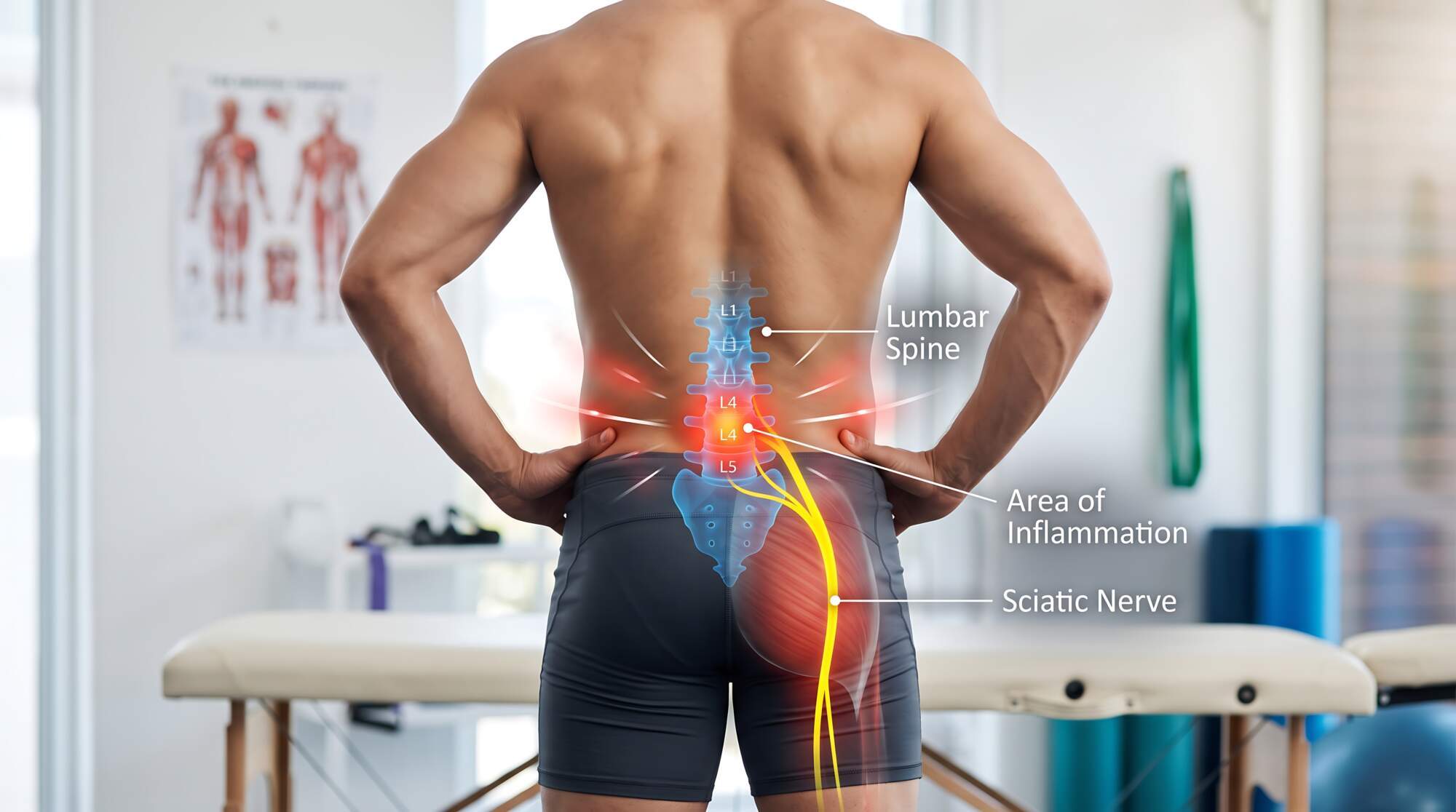
Your sciatic nerve is the longest nerve in your body, running from your lower spine down through your buttocks and into your legs. In golfers, two main culprits cause it to get irritated: tight hip flexors and a tight piriformis muscle (a deep buttock muscle that sits right on top of the nerve).
The golf swing involves powerful rotation through your torso and hips. Repeat that thousands of times over a season, and your hip flexors and piriformis can become chronically tight. Add in the fact that many golfers spend their weekdays sitting at desks—which shortens the hip flexors even more—and you’ve got a recipe for sciatic pain. When these muscles tighten, they can actually compress or irritate the sciatic nerve, causing numbness, tingling, or a burning sensation down your leg.
Spinal misalignment compounds the problem. If your lumbar spine is out of alignment or your pelvis is tilted, it changes how pressure distributes through your lower back and hips. Every swing then reinforces that misalignment, and the nerve irritation gets worse.
Why This Matters for Your Game—and Your Health
Sciatica doesn’t just hurt; it sabotages your golf. Pain and numbness in your leg limit your range of motion, weaken your stance, and throw off your swing mechanics. You compensate by adjusting your posture or favoring one side, which creates new problems up the chain—shoulder pain, lower back strain, or worse.
Left untreated, sciatic irritation can become chronic. What starts as weekend pain can become an all-week ache that affects your work, sleep, and quality of life.
The good news: sciatica from hip and lower back tightness responds well to proactive chiropractic care. Dr. Basco works with golfers to address the root cause—misalignment, muscle tightness, and movement dysfunction—rather than just masking symptoms.
Chiropractic adjustments realign your spine and pelvis, taking pressure off the sciatic nerve. Combined with soft-tissue work and targeted mobility exercises, this approach can relieve pain and restore your swing mechanics. Many golfers see improvement in just a few weeks when they commit to consistent care and stretching.
Preventive Mobility Work
Beyond treatment, staying ahead of sciatica means keeping your hips and lower back mobile. Simple daily habits make a huge difference:
- Stretch your hip flexors and piriformis for 60–90 seconds each, several times per week
- Avoid sitting for more than 30 minutes at a time—stand and move if you work at a desk
- Strengthen your glutes and core to support your lower back during the golf swing
- Warm up properly before rounds, focusing on spinal rotation and hip mobility
Golfers who add these habits to their routine—along with regular chiropractic check-ins—report fewer flare-ups, better pain control, and improved swing consistency.
Sciatica doesn’t have to end your golf season. If you’re an Alameda-area golfer dealing with hip, lower back, or leg pain, reach out to Dr. Basco for a spinal assessment. The right care now can mean pain-free rounds and better performance for years to come.
Call (510) 523-6773 or visit our contact page.
Indoor AC vs. Outdoor Heat
Why Your Lower Back Feels the Temperature Shift
If you work in an air-conditioned office and spend your lunch break or evenings outside in Bay Area heat, your lower back is experiencing something your conscious mind might not register: constant thermal stress. The lumbar spine—the lower five vertebrae that support most of your upper body weight—is exquisitely sensitive to temperature changes. When you move from a 72-degree indoor environment to 85-degree heat (or vice versa), your muscles don’t just adjust; they react.
Cold air causes muscles to contract and tighten as a protective reflex. Your body pulls muscles taut to conserve heat. Heat does the opposite: it relaxes muscles temporarily, increasing blood flow but also reducing the support those muscles provide to your spine. Repeat this cycle multiple times a day throughout the summer, and your lumbar discs and facet joints accumulate microtrauma that can build into pain, stiffness, or mobility loss over weeks.
The Bay Area’s Perfect Storm for Spinal Stress
The San Francisco Bay Area’s climate creates a particularly challenging pattern. You might start your morning in cool, foggy conditions, work in aggressive air conditioning, eat lunch outdoors in direct sun, return to cold indoor air, and finish the evening in moderate outdoor warmth. This isn’t a gradual seasonal transition—it’s a daily whipsaw.
The lower back bears the brunt because it’s the fulcrum of your body. Every time you sit in a cold office chair, the lumbar muscles tighten. When you stand up and walk into summer heat, they suddenly relax and lengthen, but your spinal stability hasn’t caught up. Your disc pressure shifts. Your posture compensates. Over time, these small imbalances compound into cumulative strain.
What’s Actually Happening in Your Spine
Temperature affects your spine in three main ways:
- Muscle tone and flexibility: Cold reduces blood flow and makes muscles stiff; heat increases circulation but can make muscles feel “loose” and unreliable.
- Disc hydration: Cold environments and prolonged sitting (common in air-conditioned offices) reduce disc fluid exchange, making discs less resilient.
- Nerve sensitivity: Sudden temperature changes can trigger inflammation in surrounding tissues, increasing nerve irritation and pain perception.
Your lower back doesn’t have as much muscular support as other regions—it relies on deep core stability and healthy discs. When thermal stress loosens or tightens these structures repeatedly, the risk of injury rises, even without a single “big” incident.
Ways to Reduce Thermal Spinal Stress
Small habit changes can dramatically reduce the impact. Bring a light layer (cardigan, jacket) when moving between indoor and outdoor spaces so your transition is gradual. Stay hydrated—dehydration worsens disc function and muscle cramping. Take brief walking breaks indoors before heading outside, allowing your body to adjust. When sitting in heavily air-conditioned spaces, use lumbar support or a small pillow to maintain natural spinal curve.
Stretching matters more in variable temperatures. A few minutes of gentle spinal flexion and rotation before leaving an air-conditioned space helps muscles prepare for the shift. Similarly, light stretching after time in the heat—when muscles are relaxed—helps reset alignment.
Chiropractic maintenance catches the small misalignments that temperature stress creates before they turn into chronic pain. Dr. David Basco can assess how thermal cycles are affecting your lumbar alignment and muscle balance, then use targeted adjustments to restore mobility and reduce compensation patterns. Regular adjustments during summer months—when temperature swings are most extreme—prevent the progressive tightening and disc stress that leads to bigger problems.
Think of it this way: your lower back is constantly adapting to temperature shifts. Without periodic realignment, those adaptations compound into dysfunction. A few preventive visits during the summer can save you from months of pain or restricted movement later.
If you’re spending your days moving between climate-controlled spaces and Bay Area heat, your lumbar spine is working harder than you realize. A quick spinal check-up now can confirm whether thermal stress is already creating alignment issues—and get you ahead of discomfort before it takes hold.
Ready to talk? Call (510) 523-6773 or visit our contact page.
Swimming and Spinal Health
Why Swimming Is Good for Your Spine
Summer in Alameda means pool season, beach days, and water-based fun—and there’s good news: swimming is one of the gentlest, most effective activities you can do for your spine. Unlike running or high-impact sports, water supports your body weight while allowing full range of motion. This natural buoyancy reduces stress on your discs and joints, making swimming an excellent form of active recovery.
The hydrostatic pressure of water also promotes circulation and can ease tension in tight muscles. For people recovering from back pain or dealing with chronic spinal stiffness, aquatic exercise offers a low-risk way to rebuild strength and flexibility. Dr. David Basco often recommends swimming to patients looking to stay active while their spine heals.
Proper Swimming Technique Matters
Not all swimming strokes are created equal when it comes to spinal health. Your technique directly affects how much stress lands on your back.
Freestyle (front crawl) is generally the safest stroke for your spine. Keep your head neutral—rotate it with your body rather than lifting it up—and maintain a flat body position. A streamlined posture reduces drag and prevents excessive arching of the lower back.
Backstroke is another spine-friendly choice. It naturally aligns your spine and reduces compression on your discs. However, avoid excessive arching; keep your core engaged and your hips level.
Breaststroke requires caution. The repetitive whipping motion of the legs and the forward head position can strain your neck and lower back over time. If you enjoy breaststroke, limit it or focus on shorter, controlled movements with good form.
Butterfly demands significant spinal mobility and core strength. If you have any existing back pain, skip this stroke or wait until you’ve regained full strength and cleared it with Dr. Basco.
Common Poolside Injuries to Avoid
Even in the water, injuries happen—often when we’re not in the water. Slipping on wet decks, diving into shallow pools, and jumping off the diving board are common culprits for acute spinal trauma. Always walk carefully on wet surfaces, wear water shoes if the pool deck is slippery, and never dive unless you’re certain the water is deep enough and free of obstacles.
Overexertion is another sneaky risk. Jumping into intense swimming after months of inactivity can overwhelm your spinal muscles and ligaments. Build gradually; start with 15–20 minutes of easy swimming and increase duration and intensity over several weeks.
Cold water can also trigger muscle tension and stiffness. If you’re swimming in an unheated pool or ocean, warm up gradually and limit your time until your body acclimates.
Maximize Spinal Benefits With Aquatic Exercise
Beyond lap swimming, water-based exercises offer targeted spinal support. Walking in waist-deep water engages your core without impact. Gentle water aerobics classes improve cardiovascular fitness while protecting your joints. Even floating and stretching in the pool can decompress your spine and ease tension.
The beauty of aquatic activity is that you’re actively moving and strengthening your body—exactly what spinal health demands—without the jarring forces of land-based exercise. This aligns perfectly with the active recovery approach Dr. Basco advocates, where movement and proper mechanics trump prolonged rest.
When to Seek Care
Mild muscle soreness after a swimming session is normal. Sharp pain, persistent stiffness, or pain that worsens over days is not. If you experience neck pain, lower back pain, or radiating symptoms after swimming or any water activity, don’t wait—contact Basco Chiropractic to get evaluated.
Early intervention prevents small injuries from becoming chronic problems. Dr. Basco can assess your spine, identify whether poor technique or an underlying condition is causing pain, and develop a recovery plan tailored to get you back in the water safely.
Make Summer Water Fun and Safe
Swimming is a gift for your spine when done mindfully. Focus on good form, progress gradually, and listen to your body. Alameda’s beautiful pools and beaches await—enjoy them with confidence, knowing that proper technique and spinal awareness keep you healthy and active all summer long.
Ready to talk? Call (510) 523-6773 or visit our contact page.
Summer Screen Time
Summer Screen Time Brings Posture Challenges
Summer feels like a break from routine—and in many ways, it is. School’s out, work schedules loosen, and suddenly you’re working from coffee shops, scrolling on your phone by the pool, or letting your kids binge their favorite shows on the couch. But here’s the thing: your spine doesn’t take a summer break. Poor posture during relaxed, unstructured time can add up just as quickly as slouching at an office desk.
The difference is that summer screen time often happens in positions we’d never sit in during a normal workday. You’re reclined on a lounge chair, nestled in a corner of the couch, or hunched over a tablet with it resting on your lap. These casual positions might feel comfortable in the moment, but they create real stress on your cervical spine—and that stress accumulates.
During the school year, structure helps. You’re at a desk, in a chair, with your monitor at eye level (or at least, closer to it). Summer flattens that structure. Work becomes nomadic. Kids aren’t bound by classroom seating. Everyone’s tech use becomes more relaxed, more casual—and more likely to involve poor spinal alignment.
Your neck and upper back bear the weight of your head all day, every day. When you tilt forward to look at a phone, you’re adding up to 60 pounds of pressure on your cervical spine with each degree of forward flex. On a sunny afternoon, when you’re not thinking about posture, that forward head position can persist for hours. Multiply that across weeks of summer, and you’re setting yourself up for neck pain, headaches, and muscle tension that can linger into fall.
Kids’ Spines Are Especially Vulnerable
Children and teens have growing spines that are still developing proper curvature and strength. When kids spend their summer break glued to tablets, smartphones, and laptops—often in slouched, reclined, or twisted positions—they’re training their spines to maintain poor alignment during a critical developmental window.
A child lounging with a tablet at chest level, or a teenager texting with their neck bent, isn’t just experiencing temporary discomfort. They’re reinforcing postural habits that can persist into adulthood. Summer is long enough to embed poor positioning as the “normal” way to sit, making it harder to correct later.
Tips for Summer Screen Alignment
Protecting your spine during summer doesn’t mean giving up screens—it means being intentional about how you use them.
- Bring screens to eye level. Whether you’re at the pool, a coffee shop, or your backyard, prop tablets and laptops on a small stand or cushion. Your eyes should look straight ahead, not down.
- Phone use counts. Hold your phone at eye level when scrolling, or limit phone time to short bursts. Many neck pain cases start with “just checking messages” in a bent-neck posture.
- Take movement breaks. Every 20–30 minutes, stand, stretch, and move your neck gently through its full range of motion. Summer’s outdoor setting makes this easier—take a walk, swim, or simply stand up and look at the sky.
- Watch your kids’ habits. Encourage them to use screens at proper heights and to take breaks. Model good posture yourself; kids mirror what they see.
- Recline mindfully. If you’re relaxing in a lounge chair, a small cushion behind your neck can maintain proper cervical curve. Avoid deep recline positions for extended periods.
Even with the best intentions, summer screen time creeps up. By late August, many people notice accumulated neck stiffness, shoulder tension, or low-grade headaches. Rather than carry that into the fall’s busier schedule, it’s worth addressing it now.
Dr. David Basco can assess your spine and your kids’ alignment, identify any misalignment caused by summer’s relaxed posture, and correct it before bad habits become entrenched. A few adjustments now can prevent weeks of discomfort later and help your family start the fall with better spinal health.
Summer’s flexibility is one of its great gifts—just make sure your spine stays flexible and aligned while you’re enjoying it. Small posture tweaks and periodic chiropractic check-ins keep you and your family feeling good through summer and beyond.
Ready to talk? Call (510) 523-6773 or visit our contact page.
Weekend Warrior Gardening
The Weekend Gardening Trap
You wake up Saturday morning with a clear agenda: finally tackle that overgrown flower bed, trim the hedges, plant new vegetables, and maybe power-wash the patio. By Sunday evening, your back is screaming. Monday morning arrives, and you can barely bend to tie your shoes. If this sounds familiar, you’re not alone—and the culprit isn’t just age or weakness. It’s the repetitive, high-intensity strain that comes from condensing a week’s worth of yard work into two days without proper body mechanics or recovery strategies.
Gardening is deceptively demanding. Unlike a gym workout where you might warm up and rest between sets, yard work combines prolonged bending, twisting, lifting, and repetitive motions—all while your spine is under constant stress. Add poor posture (hunching over beds), heavy loads (soil bags, mulch), and awkward angles (reaching, digging), and you have a perfect recipe for acute spinal irritation.
Your Spine Takes a Hit During Gardening
The spine is a network of vertebrae, discs, and supporting muscles designed for balanced movement. Gardening violates that balance. When you bend forward to dig, your intervertebral discs experience compression and shear forces. Twisting while holding a shovel adds rotational stress. Lifting heavy pots or bags without engaging your core shifts the load to your lower back rather than your legs and abdominal muscles.
The real problem emerges because gardening is sustained and repetitive. You might dig continuously for three hours without a meaningful break. Your muscles fatigue, your posture deteriorates, and the small stabilizer muscles of your spine become exhausted. By the time you notice pain Sunday evening, the damage—inflammation, micro-tears in muscle fibers, or disc irritation—has already accumulated.
After an intense gardening session, your instinct might be to rest completely on Monday. Resist that urge. Sitting still actually prolongs stiffness and delays healing. Movement increases blood flow, which delivers oxygen and nutrients to irritated tissues and helps flush out inflammatory chemicals. Light activity—walking, gentle stretching, or easy mobility work—accelerates recovery far better than immobility.
That said, “active recovery” doesn’t mean doing more gardening or heavy lifting. It means moving in ways that don’t re-aggravate the injury. A 20-minute walk around your Alameda neighborhood, gentle yoga, or swimming in cool water all encourage healing without adding fresh strain.
Smart Gardening Strategies
Warm up first. Spend 10 minutes walking or doing light stretches before you start digging, raking, or lifting.
Take frequent breaks. Every 30 to 45 minutes, stop and stand upright for 5 minutes. Let your spine decompress and your muscles relax.
Bend at the knees, not the waist. Squat down to garden rather than bending forward. Your legs are stronger than your back.
Lighten the load. Fill smaller bags or pots. Multiple trips beat one heavy lift every time.
Stretch afterward. Spend 10 minutes stretching your hip flexors, hamstrings, and lower back after you finish. This reduces stiffness the next day.
If active recovery and prevention aren’t enough—if pain persists, radiates, or limits your movement—chiropractic adjustment can help. Dr. David Basco and the team at Basco Chiropractic in Alameda can assess whether your pain comes from muscular strain, misalignment, or disc irritation. A targeted adjustment realigns vertebrae, reduces nerve irritation, and restores mobility so that active recovery can actually work. Combined with stretching and gradual movement, chiropractic care often resolves gardening-induced back pain within days to weeks rather than months of suffering through it.
Weekend gardening doesn’t have to mean Monday morning regret. Smart pacing, proper technique, and a commitment to active recovery keep your spine healthy and your yard looking great.
Ready to talk? Call (510) 523-6773 or visit our contact page.
Golf Season
Prevent Injuries Before You Swing
Spring and early summer mark prime golf season across the Bay Area, from courses in Alameda and Oakland to the coastal links of Half Moon Bay. While golf may seem gentler than contact sports, it places unique and serious demands on your spine, shoulders, and core. The combination of seasonal enthusiasm—players often jump into regular rounds after months of lighter activity—and the explosive, repetitive nature of the golf swing creates a perfect storm for injury.
Many Bay Area golfers underestimate how much rotational force their bodies absorb with every swing. A single golf stroke involves rapid twisting of the spine, stabilization through the shoulders, and explosive power from the legs and core. When your body isn’t properly aligned or your spinal mobility is compromised, that force gets concentrated in vulnerable spots, leading to pain and injury that can sideline your season.
Common Golf Injuries and What Causes Them
The most frequent golf-related injuries Dr. David Basco treats involve the lumbar spine, shoulders, and rotator cuff. Lower back pain is the classic culprit—the twisting motion combined with the bent-over posture of address creates enormous shear force through the discs and facet joints. Golfers often feel a sharp pain mid-swing or notice stiffness the morning after a round.
Shoulder injuries are equally common. The rotational demands of the backswing and follow-through, especially in golfers with poor mobility, strain the shoulder joint and the muscles that stabilize it. Golfers frequently develop tendonitis or impingement that worsens with repeated rounds.
The root cause in most cases is restricted spinal mobility combined with poor swing mechanics. When your vertebrae are misaligned (a condition called subluxation), your nervous system can’t properly coordinate muscle firing, and your body compensates by jamming stress into other joints. This is where chiropractic care makes a measurable difference.
How Spinal Health Optimizes Your Swing
A healthy, mobile spine with proper alignment allows you to rotate through your hips and shoulders symmetrically. This distributes the rotational load across multiple joints instead of concentrating it in your lower back. Dr. Basco works with golfers to restore alignment and mobility so they can achieve a fuller, smoother swing with less compensatory stress.
Chiropractic adjustments restore proper motion to the vertebrae, reducing nerve interference and improving muscle activation. When your spine moves freely, your core stabilizers fire efficiently, supporting your shot and protecting your back. Many golfers report improved distance, accuracy, and consistency after a few weeks of care.
Beyond adjustments, spinal health encompasses flexibility, strength, and body awareness. Golfers who maintain good posture off the course—sitting upright at your desk, standing tall while waiting in line—reduce compensatory stress that accumulates over weeks and months.
Don’t wait until pain forces you off the course. The best time to address spinal alignment and mobility is before you ramp up your rounds. A chiropractic assessment can identify misalignments, mobility restrictions, or muscle imbalances that will worsen once you start playing regularly. Dr. Basco can spot issues that don’t yet cause pain but will under the stress of a busy golf season.
Early spring is ideal: you have time to correct problems and build good habits before peak season hits. Even golfers without current pain benefit from a baseline assessment and a few preventive adjustments to ensure their spine is primed for the demands ahead.
If you’re already feeling spring stiffness or noticing your swing feels off, don’t ignore it. Early intervention prevents minor issues from becoming season-ending injuries. Many golfers put off care until they can barely walk, only to regret losing weeks of play.
Golf season in the Bay Area doesn’t have to mean pain season. By prioritizing spinal health and alignment now, you’ll enjoy your rounds without fear of injury and likely improve your game in the process. Dr. Basco has extensive experience working with golfers and recreational athletes to prevent injury and optimize performance.
Reach out to discuss a pre-season assessment, or schedule an appointment if you’re already experiencing pain. The sooner you address spinal health, the more golf you’ll enjoy this season.
Contact Basco Chiropractic today: Visit our contact page or call (510) 523-6773 to book your appointment.
Ready to talk? Call (510) 523-6773 or visit our contact page.