Commute Neck Pain: Why Your Drive to Work Might Be Hurting Your Spine

Commute Neck Pain

The Commute Problem: Repetitive Strain on Your Cervical Spine

If you’re one of thousands of Alameda residents commuting daily to Oakland, San Francisco, or beyond, you already know the frustration: sitting in traffic, gripping the steering wheel, and watching the minutes (and your stress levels) climb. What you might not realize is that your commute could be causing real, measurable damage to your cervical spine—the delicate stack of vertebrae supporting your neck and head.

Long commutes, especially those involving bumper-to-bumper traffic and repetitive steering movements, place your neck in a state of constant low-level strain. Unlike a one-time injury, commute-related neck pain builds gradually through poor positioning, muscle tension, and prolonged static posture. Many of our patients in Alameda and the surrounding Bay Area don’t connect their neck discomfort to their daily drive—until the pain becomes impossible to ignore.

How Your Steering Wheel Position Affects Your Spine

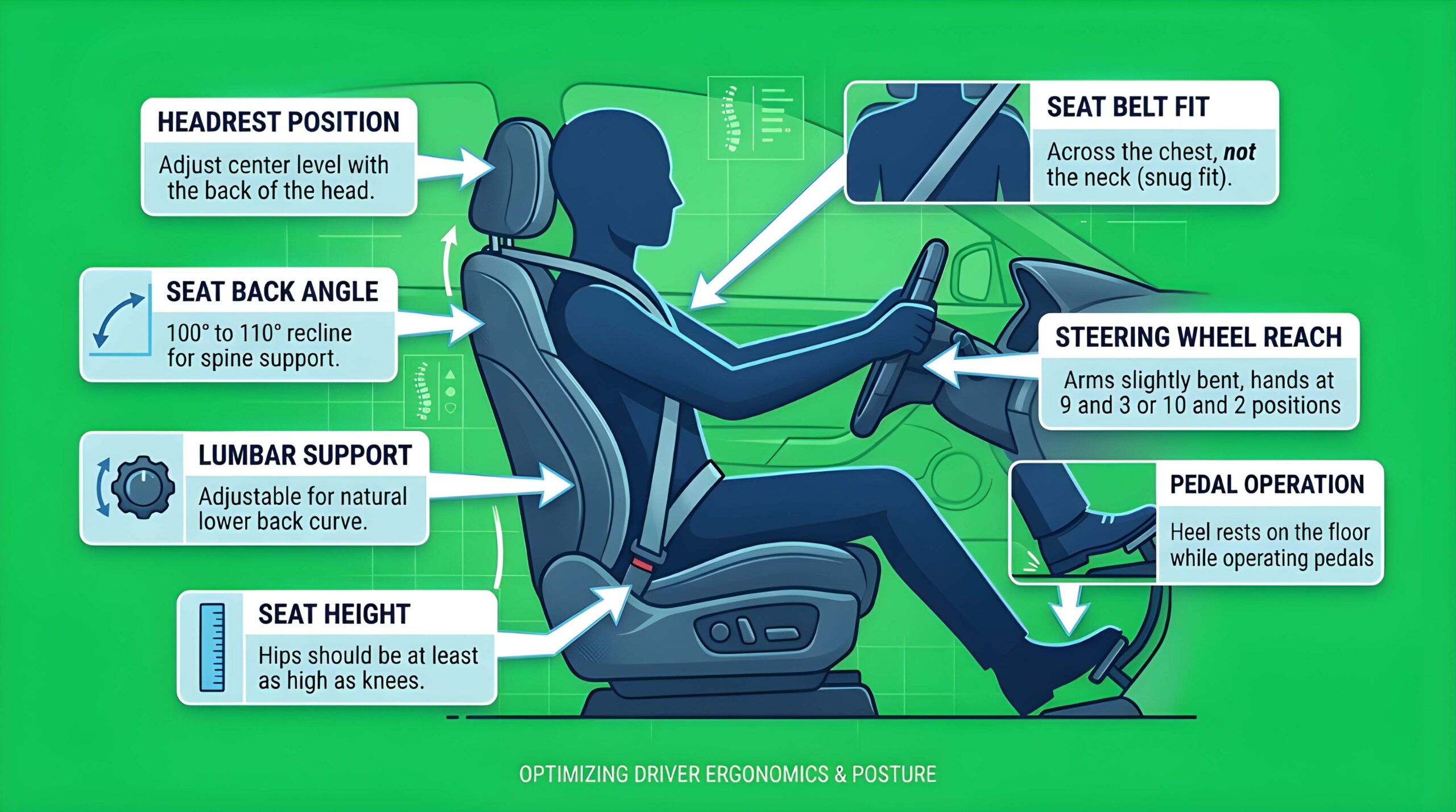
Most drivers don’t think about their hand position on the steering wheel or how far they sit from the dashboard. But these details matter enormously for spinal health. When you sit too close to the wheel, your shoulders round forward and your neck juts ahead—a posture called “forward head posture.” This position places extra stress on the cervical vertebrae and the muscles that support them.

Conversely, sitting too far back and reaching for the wheel creates excessive tension in your shoulders and upper back. The ideal position keeps your shoulders relaxed, your elbows at roughly 90 degrees, and your head balanced directly over your shoulders. Yet in the stress of Bay Area traffic, most drivers unconsciously tense up, creeping closer to the wheel and gripping it harder—exactly the opposite of what your spine needs.

Tension, Traffic, and Spinal Misalignment

Traffic delays are a daily reality for Alameda commuters. Sitting stationary or crawling forward inch by inch means your neck muscles remain in a state of low-level contraction for extended periods. This sustained tension can lead to muscle imbalances, reduced blood flow to surrounding tissues, and—over weeks and months—postural changes that contribute to vertebral misalignment.

When vertebrae drift out of proper alignment, they can irritate nearby nerves and soft tissues, causing pain that radiates into your shoulders, arms, or between your shoulder blades. Many people assume this pain is just “from driving” and accept it as inevitable. In reality, spinal misalignment is addressable, and early intervention prevents worse problems down the road.

Practical Steps to Protect Your Commute Neck

Start with the basics: adjust your seat so your hands rest comfortably on the steering wheel without reaching, and keep your shoulders relaxed and away from your ears. Take short breaks if your commute exceeds 45 minutes—even pulling over for five minutes to step out and stretch makes a difference.

Strengthen your neck and upper back with gentle exercises at home. Simple movements like chin tucks and shoulder rolls help counteract the forward-head posture that develops during long drives. And be mindful of your breathing; many drivers unconsciously hold tension in their shoulders when stressed.

When to Seek Chiropractic Care

If you’ve noticed persistent neck stiffness, soreness, or radiating pain that started (or worsens) after longer commutes, chiropractic evaluation can help identify whether spinal misalignment is the culprit. Dr. David Basco has worked with countless Alameda and Bay Area commuters to restore proper spinal alignment and reduce the pain that long drives create. Adjustments realign vertebrae, reduce nerve irritation, and combined with posture awareness, can prevent commute pain from becoming a chronic problem.

Your commute doesn’t have to hurt. With the right adjustments and posture habits, you can reclaim a pain-free drive and protect your long-term spinal health.

Ready to talk? Click here to contact our Office or Call (510) 523-6773.

Budget Strategy

Budget Strategy

Rising healthcare costs make it essential to have a clear budget strategy for your health. Instead of reacting to pain after it becomes severe, a proactive approach helps you avoid expensive treatments and maintain long-term wellness.

A smart budget strategy focuses on prevention. When it comes to spine-related pain, research shows that patients who begin care with chiropractic often experience lower overall healthcare costs. Starting with conservative care reduces the likelihood of needing advanced imaging, injections, or surgery later on.

When spinal issues go unaddressed, they tend to worsen over time. This progression often leads to more invasive and costly interventions, including emergency room visits and surgical procedures. By addressing the root cause early through spinal adjustments, many patients prevent this escalation.

Studies continue to show that patients who choose chiropractic first are less likely to require high-cost medical services. They experience fewer hospitalizations, reduced imaging, and lower rates of surgery. This makes chiropractic a practical and effective budget strategy for managing both health and expenses.

Regular adjustments help maintain proper spinal alignment and support nervous system function. When your body functions efficiently, it handles stress better, recovers faster, and reduces the likelihood of chronic issues that require costly care.

Consistency plays a key role in making this approach effective. A long-term budget strategy is not about occasional care—it is about maintaining your health over time. Small, consistent investments in spinal health can prevent large, unexpected medical bills in the future.

In addition to chiropractic care, maintaining good posture, staying active, and managing daily stress all support a strong foundation for health. These habits work together to reduce strain on the body and improve overall function.

A well-planned budget strategy does more than save money—it protects your quality of life. By prioritizing preventive care, you reduce your risk of serious complications and maintain greater independence as you age.

Now is the time to think differently about your health. We offer a proactive, cost-effective way to stay ahead of problems and avoid unnecessary expenses.

If you want to take control of both your health and your finances, consider making regular spinal care part of your budget strategy.

Click here to contact Dr. Basco or call 510-523-6773

Seasonal Allergies

Seasonal Allergies

Seasonal allergies do more than cause sneezing, congestion, and itchy eyes. Seasonal allergies can also affect your spine and nervous system, influencing how your body feels and functions during certain times of the year.

When seasonal allergies flare up, your immune system reacts to triggers like pollen, dust, and mold. This response increases inflammation throughout the body. As inflammation rises, muscles in the neck, shoulders, and upper back often tighten, placing added stress on the spine.

That tension can affect spinal alignment, especially in the cervical region. When the spine is not moving properly, it can interfere with nervous system function. Your nervous system controls how your body responds to stress, inflammation, and immune challenges. Even small disruptions can make it harder for your body to adapt during allergy season.

Dr. Basco focuses on restoring proper spinal alignment and supporting nervous system function. When your spine moves correctly, your body communicates more efficiently and responds better to the effects of seasonal allergies. Many patients notice reduced tension, improved mobility, and easier breathing during peak allergy months.

You can also take simple steps to manage seasonal allergies more effectively. Staying hydrated, maintaining good posture, and limiting exposure to allergens all help support your body. When combined with chiropractic care, these habits can improve how your body handles seasonal stress.

Allergies are common, but they do not have to control how you feel. Supporting your spine and nervous system allows your body to function at a higher level, even during allergy season.

If seasonal allergies leave you feeling tense or uncomfortable, we offer a natural way to stay balanced. A healthy spine helps your body adapt, recover, and stay strong throughout the season.

Click here to contact Dr. Basco or call 510-523-6773

Your Laptop

Your Laptop

What Your Laptop Setup is Doing to Your Spine

“I don’t know why my neck and shoulders hurt. I just work on my laptop.”

That’s usually the problem.

Laptops were designed for portability — not posture. When you use one for hours at a desk, on the couch, or at the kitchen table, your spine adapts to the screen position. And the screen is almost always too low.

To see it clearly, you bend your neck forward. Your shoulders round. Your upper back collapses. Over time, this position increases stress on the cervical spine, strains the muscles between the shoulder blades, and overloads the small stabilizing muscles that support proper posture.

The human head weighs about 10–12 pounds. When your head moves just a few inches forward, the effective load on your neck increases significantly. That constant forward-head posture can contribute to tension headaches, upper back tightness, shoulder pain, and even tingling into the arms.

The problem isn’t just discomfort. Prolonged poor positioning changes how joints move and how muscles fire. Some muscles become tight and overactive. Others weaken and stop doing their job. The longer this pattern continues, the more your body adapts to it — and the harder it becomes to correct.

The good news? The solution is simple.

Start by raising your screen so the top third of the monitor is at eye level. Use a laptop stand or even a stack of sturdy books. Then add an external keyboard and mouse so your elbows stay at roughly 90 degrees and your shoulders can relax. Sit with your feet flat on the floor and your lower back supported.

Most importantly, move. Even perfect posture becomes stressful if you hold it too long. Stand up every 30–60 minutes. Stretch your chest. Gently retract your shoulders. Reset your position.

Dr. Basco can help restore healthy joint motion in the spine and reduce the stress caused by prolonged forward posture. Improving mobility in the neck and upper back allows your body to tolerate daily demands more efficiently. When combined with simple ergonomic changes, it can significantly reduce recurring tension and strain.

Your laptop isn’t the enemy. The setup is.

If your neck, shoulders, or upper back feel tight after a workday, it may be time to address what your workstation is doing to your spine — and correct it before small habits become long-term problems.

Click here to contact Dr. Basco or call 510-523-6773

Prolonged Rest Can Make Pain Worse

Prolonged Rest

Here’s Why

“I’ve been trying not to move it.”

That’s something we hear often from patients dealing with neck or back pain. They avoid turning their head. They sit carefully. They limit bending and twisting because movement feels like it might make things worse.

It seems logical. If something hurts, protect it. But in many cases, prolonged rest can actually prolong the problem.

The body is built for motion. Muscles, joints, discs, and nerves all depend on regular movement to stay healthy. When activity decreases, muscles tighten and weaken. Joints become stiff. Circulation slows. The nervous system can become more sensitive, interpreting normal movement as a threat instead of something safe.

Spinal discs rely especially on motion. They do not have a strong direct blood supply. Instead, they receive nutrients through changes in pressure that occur when you move. When movement is limited for too long, that natural exchange decreases. Stiffness increases, and recovery can take longer.

This doesn’t mean ignoring sharp pain or pushing through a significant injury. Short-term rest after an acute flare-up can be appropriate. But extended inactivity often creates secondary issues — reduced mobility, muscle imbalance, and decreased stability. Over time, the body becomes less resilient.

Pain may improve temporarily with rest, but the underlying mechanical stress often remains.

True recovery focuses on restoring healthy movement patterns. That includes improving joint mobility, reducing nerve irritation, and strengthening the muscles that support the spine. When movement improves, circulation improves. When circulation improves, tissues heal more efficiently.

Dr. Basco addresses the mechanical factors contributing to restricted motion. By improving joint function and supporting better biomechanics, the body is better able to move without irritation.

Rest has its place. But movement is often the missing piece.

If your neck or back pain has lingered despite “taking it easy,” it may be time to focus on restoring function rather than continuing to avoid activity.

Pain doesn’t always mean stop. Often, it means move better.

Click here to contact Dr. Basco or call 510-523-6773

Disc Injuries Don’t Happen Overnight

Disc Injuries

Here’s Why

“I just bent over and my back went out.”

We hear this all the time. The pain feels sudden and intense, so it must have just happened, right? Not usually. Most disc injuries develop gradually over time. That final bend or twist is often just the tipping point — not the true cause.

Your spinal discs are designed to absorb shock and support movement. They’re strong and resilient. But like any structure under repeated stress, they can weaken when small strain adds up over months or years. Prolonged sitting, poor posture, repetitive bending or twisting, old injuries that never fully healed, and weak core stability can all contribute. Individually, these stressors may not cause pain. Collectively, they can create small changes in the disc’s outer fibers that reduce its ability to handle load.

Then one day, you reach for something simple — and pain appears. The movement didn’t create the problem. It exposed it.

If disc injuries develop slowly, recovery must address more than just symptoms. Masking pain without correcting spinal alignment, joint motion, or muscle imbalance allows the underlying stress to continue. True healing focuses on restoring proper movement patterns and reducing ongoing strain on the disc.

Dr. Basco helps improve joint mobility, decrease nerve irritation, and support healthier biomechanics. When combined with corrective exercises and postural awareness, it reduces the mechanical stress that contributes to disc injuries in the first place.

Disc injuries are rarely random. They are usually the result of patterns — and patterns can change. Improving posture, strengthening supportive muscles, and maintaining healthy spinal motion can significantly reduce your risk of future problems. Pain may feel sudden, but disc injuries rarely are. If your back or neck pain seemed to come out of nowhere, it may be time to address the cause — not just the symptom.

Click here to contact Dr. Basco or call 510-523-6773

Daily Stress and what your Posture Says About it

Daily Stress

Your posture is more than a reflection of how you sit or stand—it’s a physical expression of how your body is responding to daily stress. Long hours at a desk, constant phone use, emotional pressure, and mental overload all leave subtle (and sometimes not-so-subtle) marks on the body. Over time, these patterns can affect how you move, breathe, and feel.

When the body is under chronic stress, the nervous system often shifts into a protective state. Shoulders may round forward, the head drifts ahead of the body, and the upper back stiffens. These postural changes aren’t signs of laziness or weakness—they’re adaptive responses. The body is doing its best to cope with repeated demands, tension, and fatigue.

Forward head posture, for example, is commonly associated with prolonged screen time and mental focus. This position places added strain on the neck, upper back, and shoulders, often contributing to headaches, stiffness, and muscle tension. Similarly, a rigid or collapsed posture can restrict breathing, limiting the body’s ability to shift out of a stress response and into a more relaxed state.

What’s important to understand is that posture and stress influence each other. Daily stress can create postural changes, and those changes can, in turn, reinforce stress signals in the nervous system. This feedback loop is one reason why rest alone doesn’t always resolve physical discomfort. Even when stress levels feel lower mentally, the body may still be holding onto old patterns.

Dr. Basco looks at posture not as something to “fix,” but as information. By evaluating spinal alignment, joint motion, and muscular balance, chiropractors can identify areas where the body is compensating or under strain. Gentle adjustments help restore movement and reduce tension, giving the nervous system clearer input and more capacity to adapt.

Over time, improved alignment can support better posture, easier breathing, and a greater sense of physical ease. Many people notice that as their posture improves, they also feel more grounded, focused, and resilient in daily life.

Your posture tells a story about how you’re navigating your world. Paying attention to it—and supporting it through chiropractic care—can be a meaningful step toward managing stress and improving overall well-being.

Click here to contact Dr. Basco or call 510-523-6773

Muscle Pain

Muscle Pain

The Difference Between Muscle Pain and Nervous System Overload

Many people assume that all pain comes from tight or injured muscles. While muscles certainly play a role, they are often not the true source of ongoing discomfort. In many cases, pain reflects nervous system overload, not simple muscle strain. Understanding the difference helps explain why pain sometimes lingers even after rest, stretching, or massage.

Muscle pain usually develops after overuse, injury, or sudden strain. You might notice soreness, stiffness, or tenderness in a specific area. This type of pain often improves with rest, heat, hydration, gentle movement, or manual therapy. Muscles heal relatively quickly when they receive proper blood flow and recovery time. If muscle pain were the whole story, most people would feel better within days.

However, many patients experience pain that behaves differently. It comes and goes unpredictably, feels widespread, or persists despite doing “all the right things.” This pattern often points to nervous system overload.

Your nervous system controls how your body perceives pain, tension, and stress. When it becomes overloaded, it stays stuck in a heightened state of alert. Poor posture, chronic stress, spinal misalignment, lack of sleep, and repetitive strain can all overwhelm the nervous system. Instead of relaxing, the body remains guarded and tense. Muscles tighten as a protective response, but they are reacting to faulty nerve signaling—not causing the problem themselves.

Nervous system overload can show up as muscle tightness, headaches, jaw tension, fatigue, poor sleep, or pain that moves from one area to another. You may also feel sensitive to touch or notice that small stresses trigger big reactions. In these cases, treating muscles alone brings only temporary relief.

Chiropractic adjustments help restore proper spinal motion and improve communication between the brain and body. By reducing interference in the nervous system, chiropractic care allows muscles to relax naturally instead of being forced to release. Over time, the body shifts out of a constant “fight or flight” state and into a healthier balance.

Pain is not always a sign of tissue damage. Often, it is a signal that the nervous system needs support. By addressing the root cause rather than chasing symptoms, Dr. Basco can help the body heal more effectively and function at a higher level.

If pain keeps returning or never fully resolves, it may be time to look beyond muscles and consider the health of your nervous system.

Click here to contact Dr. Basco or call 510-523-6773

Age Smarter

Age Smarter

Aging is a natural part of life, but how we age is largely up to us. While genetics play a role, your daily habits and lifestyle choices have a much greater impact. One often-overlooked factor in healthy aging is spinal health — and that’s where we come in.

Your spine does far more than support your posture. It’s the communication highway between your brain and body. When your spine is properly aligned, your nervous system functions at its best, helping every organ, muscle, and cell stay in sync. This is essential for maintaining balance, strength, coordination, and even mental clarity as you age.

Over time, stress, injuries, and poor posture can create misalignments, or subluxations, in the spine. These subtle shifts can interfere with nerve function, leading to stiffness, pain, fatigue, and slower recovery. Regular chiropractic adjustments restore proper alignment, allowing your body to move more freely and efficiently.

One of the biggest benefits of chiropractic care for older adults is improved mobility. When joints move the way they should, it’s easier to stay active — and activity is the foundation of longevity. Chiropractic adjustments help reduce inflammation, relieve tension, and keep your range of motion strong, so you can continue doing the things you love.

It also supports balance and coordination by ensuring the brain receives accurate signals from the body. This can lower your risk of falls and help you stay confident and independent as you age.

Healthy aging isn’t about avoiding time — it’s about maximizing it. By keeping your spine aligned and your nervous system healthy, Dr. Basco helps your body function the way it was designed to. Combined with good nutrition, regular movement, and mindful stress management, it’s one of the most natural ways to stay youthful and strong.

Aging smarter starts with how you care for your spine. Regular chiropractic adjustments can help you move better, feel better, and live better — no matter your age.

Click here to contact Dr. Basco or call 510-523-6773

Boost Your Energy!

Boost Your Energy

Feeling tired all the time isn’t just about getting too little sleep. Low energy can come from stress, poor posture, and even spinal misalignments that affect how your nervous system functions. Many people are surprised to learn that regular chiropractic care may help restore energy naturally by improving the way your body works as a whole.

Your spine does more than support your body — it also protects the nervous system. When the spine is out of alignment, it can create stress on the nerves, muscles, and joints. This extra tension uses up energy that your body could be directing toward healing, focus, and daily activity. Chiropractic adjustments help restore proper alignment, reducing this strain and allowing your nervous system to function more efficiently.

Poor spinal alignment can lead to muscle tightness, pain, and restless sleep. Without quality rest, it’s nearly impossible to feel energized the next day. By correcting imbalances, chiropractic care may help improve sleep quality, so your body can recover and recharge the way it’s meant to.

When your body moves freely, it doesn’t have to work as hard. Adjustments can ease joint restrictions and improve circulation, which helps deliver oxygen and nutrients more effectively throughout the body. The result? Less fatigue and more stamina to get through your day.

Stress doesn’t just affect your mood — it also drains energy. Chiropractic adjustments support the parasympathetic nervous system, the part of your body responsible for rest and recovery. By calming tension and reducing stress, chiropractic care helps free up energy you may not even realize you were losing.

A Natural Energy Boost

While coffee or energy drinks provide a temporary fix, chiropractic care focuses on improving the root causes of fatigue. By aligning your body and supporting your nervous system, adjustments may give you a lasting boost in energy that helps you feel more alert, productive, and balanced.

Click here to contact Dr. Basco or call 510-523-6773